The Last Person at the Door: Why Thrillers Keep Proving the Dismissed One Right
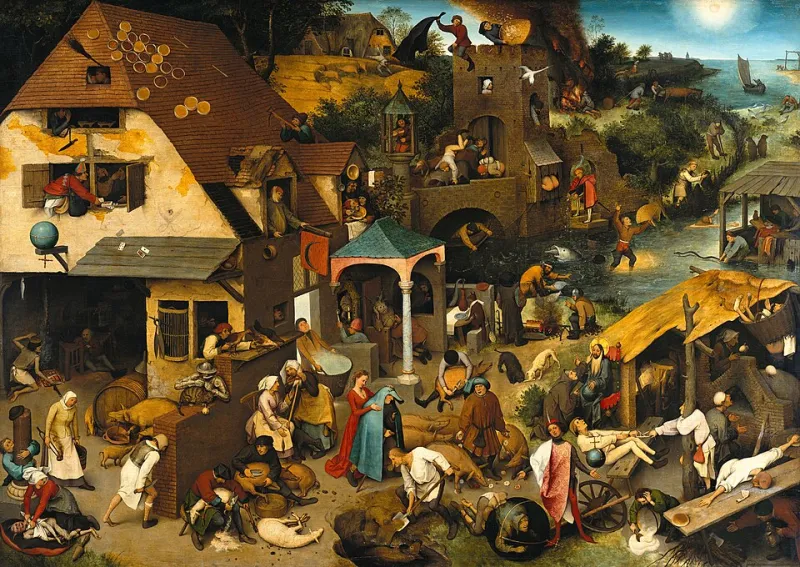
Photo: Pieter Brueghel the Elder, Public domain, via Wikimedia Commons
There’s a specific kind of silence in a thriller. Not the empty-house silence. The other one—the silence after someone says, “Something’s wrong,” and everyone else in the room decides to be polite about it. A nervous laugh. A hand on the shoulder. A suggestion to get some sleep. And then, because this is a thriller, the camera holds just long enough for us to notice the door wasn’t locked after all.
That moment is the engine behind one of the genre’s most reliable tropes: the dismissed warning-bearer. The neighbor who saw the van. The kid who swears the basement door moved. The woman who calls 911 because her husband came home wrong. Everybody calls them paranoid right before the truth comes out—and we, the audience, get to enjoy the ugly, satisfying moment when the skeptic’s face changes.
The Warning That Arrives Before the Proof
The trope is older than cinema. Aesop’s boy who cried wolf is usually taught as a lesson about lying, but it’s also a story about what happens when a community decides a warning is noise. The boy becomes a punchline. The wolf becomes a surprise. And the villagers learn too late that skepticism has a body count.
Thrillers love that math. They strip the warning down to a single voice and surround it with people who have reasons not to listen. Maybe the warning-bearer is a woman, and the room writes her off as hysterical. Maybe it’s a kid, so the adults pat their head and change the subject. Maybe it’s an outsider—a new neighbor, a night-shift worker, a veteran—someone whose credibility was never high to begin with. The genre knows that disbelief isn’t neutral. It’s a choice, and it usually protects the person doing the disbelieving.
From Aesop to the American Front Porch
Modern thrillers translate the fable into everyday spaces. A suburban street where every lawn is mowed and every window is dark. A small-town sheriff who says, “We get a lot of calls like this.” A homeowner’s association meeting that ends with a reminder to keep emotions civil. These settings matter because they’re built on a promise of safety. The scarier the threat, the more ordinary the place has to look.
US audiences have a particular relationship with that promise. We’re raised on neighborhood watches, emergency alerts, and the idea that if you see something, you say something. But we also know what happens when the something is inconvenient. People get labeled. Calls go unreturned. A woman who insists on a strange car on the street becomes “the difficult one.” A teenager who posts a creepy screenshot becomes “online too much.” The thriller doesn’t invent that dynamic. It just turns up the volume until the rest of us have to hear it.
That’s why the vindication scene works. It’s not really about the monster or the intruder. It’s about the social cost of being right too early. The dismissed one doesn’t just survive. They get to watch everyone else catch up.
Why We Root for the ‘Unreliable’ One
Genre fans are often told they like jump scares and gore. Fine. But the deeper pleasure is recognition. Most of us have been the person who noticed something off and got talked out of it. The restaurant that felt wrong. The date who knew too much. The coworker whose story didn’t line up. We’ve all swallowed a warning to keep the peace.
Thrillers let us unsay that swallow. They give the warning-bearer a microphone and a deadline. The audience knows the truth before the characters do, which creates a delicious kind of pressure. We’re not just waiting for the killer to appear. We’re waiting for the skeptics to run out of reasons.
Indie thrillers are especially good at this because they can’t hide behind spectacle. No massive CGI set piece is going to distract from a bad performance or a lazy script. The tension has to come from the room—the eye roll, the interrupted sentence, the 911 dispatcher who sighs. Small budgets force filmmakers to make the disbelief feel real, and real disbelief is scarier than any masked figure.
The Indie Advantage
Big-studio thrillers often turn the dismissed warning into a plot checkpoint. The hero shouts, “I know what I saw!” and the police say, “Stay away from the case.” Then the third act arrives on schedule. Indie movies tend to linger in the discomfort. They let the warning-bearer be embarrassing. They let the skeptics be sympathetic. They understand that the scariest thing in the room isn’t the unknown—it’s the group deciding you’re the problem.
That’s the space Crying Wolf lives in. The title itself carries the folklore. The tagline—‘Not every scream is a false alarm’—flips the fable just enough to make it dangerous. A scream is easy to dismiss when it comes from someone we’ve already decided not to believe. The movie’s question is simple and nasty: when does that scream stop being noise and become the only thing that saves everyone?
When the Scream Is the Only Signal Left
The best version of this trope doesn’t end with a smug “I told you so.” It ends with a room full of people realizing they spent the whole movie protecting their own comfort. The warning-bearer was right, but being right didn’t feel good. It felt lonely first.
That’s why we keep watching. Thrillers don’t just vindicate the paranoid one. They remind us that disbelief has a cost, and that the person everyone calls crazy might be the last one at the door—still warning us, still waiting for us to listen.
In 2026, with more noise and more skepticism than ever, that story still lands. The wolf doesn’t need to be clever. It just needs us to keep calling the warning a lie.